 |
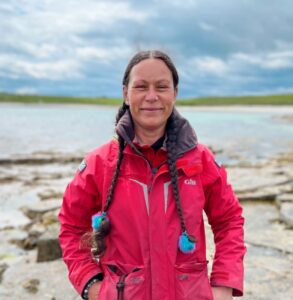
Marine Biological Association of the UK, Senior Lecturer | University of LiverpoolNova’s international research programme focuses on species and ecosystem-level responses to environmental change and multiple stressors in the marine environment, embedding small-scale, process-oriented experimental studies within larger-scale macroecological investigations. This approach focuses on individual organisms via experimental physiological ecology and ecological genomics, integrating to the population level with long-term time-series data collection, analyses, and modeling to identify mechanisms of species response. Nova is the PI for the Marine Biodiversity & Climate Change Project MarClim, which has the most spatio-temporally extensive time-series of rocky intertidal systems globally. MarClim has shown some of the fastest biogeographic range shifts in response to climate change in any natural system. Her science-policy knowledge exchange work includes provision of field survey and monitoring data and assessments of ecosystem status, contributions to national and international policy drivers, authorship on national reports including the Marine Climate Change Impacts Partnership Annual Report Cards, and presenting to UK government and EU bodies. She has developed indicators of Good Environmental Status for implementation of the Marine Strategy Framework Directive in intertidal and subtidal habitats around the UK.
|
Presentation:
Pervasive climate change, an increase in extreme weather events, and ocean acidification are occurring throughout the global oceans, and the biogeographic ranges of species are shifting to higher latitudes as temperatures and oceanic pH levels change. Long-term time-series are invaluable in tracking these shifts and providing contextual data with which to analyse the rates of change. The attribution of changes to specific drivers, however, requires an understanding of the biological mechanisms underpinning the observed responses. Emergent technology is facilitating a novel omics-to-ecosystem approach to determine which factors are causing the observed shifts in population abundances and range limits of marine species, and how species are responding at genetic and physiological levels. Using rocky intertidal species as a test system, the impacts of multiple stressors are being tracked and quantified around the coastlines of the UK and northern Europe, and the development of ecological genomics is furthering our knowledge of how and why these species-specific responses are occurring.
